Pages

Friday, January 31, 2014

Two years later, DirecTV customers can finally use Roku players to watch HBO Go

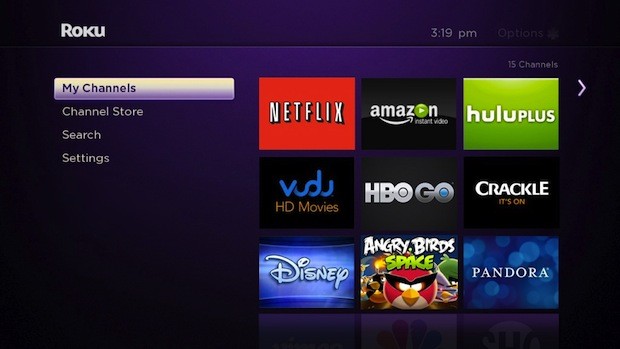
Even as HBO Go has launched on new platforms over the years, people who pay for TV service and HBO have occasionally found that their provider won't play along. That's been the case for DirecTV subscribers with a Roku ever since the app rolled out in 2011, but now things have changed. Customers started seeing the change Thursday and now the DirecTV Twitter account confirms subscribers can use their account logins on Roku. The Syfy Now app on iOS also has a fresh update that says it supports DirecTV accounts, while some users say they've been able to login to apps for History, A&E, and Lifetime, although that doesn't appear to be officially available yet. Comcast Xfinity customers are the most notable remaining group still denied activations on Roku and Samsung Smart TVs, although the service does support Apple TV and Xbox 360. Will that ever change? After this move and the recent arrival of YouTube on the platform, here's hoping Comcast, Roku and Time Warner can get together to keep the streak going.


NEWS! Now you can use your DIRECTV credentials to authenticate on Roku and watch all your favorite hit TV shows and movies from HBO!

- DIRECTV (@DIRECTV) January 31, 2014

0 Comments Share

Daily Roundup: Super Bowl XLVIII survival guide, iWatch rumors and more!

You might say the day is never really done in consumer technology news. Your workday, however, hopefully draws to a close at some point. This is the Daily Roundup on Engadget, a quick peek back at the top headlines for the past 24 hours -- all handpicked by the editors here at the site. Click on through the break, and enjoy.

Could VoIP replace cellular networks?

What would happen if all phone numbers were replaced with IP addresses? Could rural communities survive on VoIP alone? Well, those are both questions the FCC are encouraging US phone companies to consider in preparation for upcoming experiments. Follow the link for more.

Apple iWatch and iOS 8 rumors

We're still waiting for Apple to make its official appearance in the smartwatch/wearables market. In the meantime, recent reports are hinting at a focus on fitness for the rumored "iWatch" (or whatever it's officially called) and a "Healthbook" app for iOS 8. Click through for details.

Super Bowl XLVIII survivor guide

Not everyone can experience Super Bowl XLVIII from the sidelines, but that doesn't mean there aren't plenty of ways for you to catch the action digitally. That's why we put together this nifty Super Bowl survival guide. Click on through and learn how to capture all the thrill of the game, right in your living room.

Should you buy the new, slimmer PS Vita?

PlayStation's newest iteration of the PS Vita might be smaller and more portable, but is it worth the added expense? Click through and find out as Engadget's Jamie Rigg weighs the options.

You also might like: UK government will unblock websites after adult filter blunder 'Twitter Commerce' leak puts a buy button next to retweet and favorite Twitter buys hundreds of patents from IBM, ending legal spat

0 Comments Share

'Twitter Commerce' leak puts a buy button next to retweet and favorite

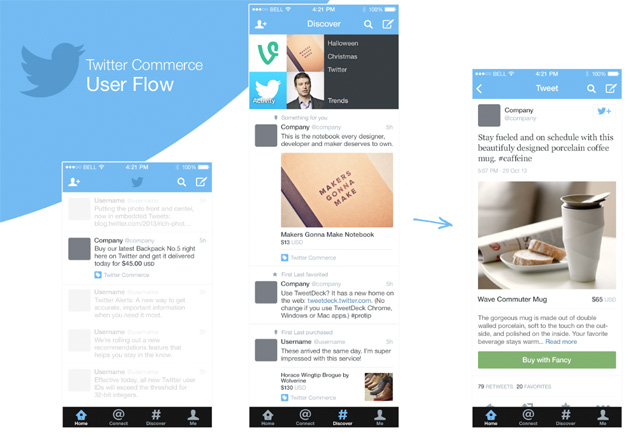
Your Twitter feed is probably already overflowing with breaking news, sponsored ads and play-by-play reactions of the latest Game of Thrones, but a new element may soon grace your timeline: a buy button. Documents found on Fancy.com's website propose a method of selling goods directly to Twitter followers by embedding miniature product pages directly in Tweets. The images, uncovered by Re/Code, show expandable, sponsored tweets that feature a sales blurb and product image underlined by a price tag and "Buy with Fancy" button. The mockup also demonstrates that purchases and package tracking could be handled completely within Twitter's own app.

Fancy's images call the setup 'Twitter Commerce,' but it's unclear if the documents are merely a proposal to the microblogging service or something that's actually in production. A Re/Code source, however, claims that Twitter is actively working with several companies to build a working commerce solution. We'd crack a joke about Facebook Gifts, but let's wait until we hear something official, shall we?

0 Comments Share

Could this licensing deal help keep BlackBerry afloat?

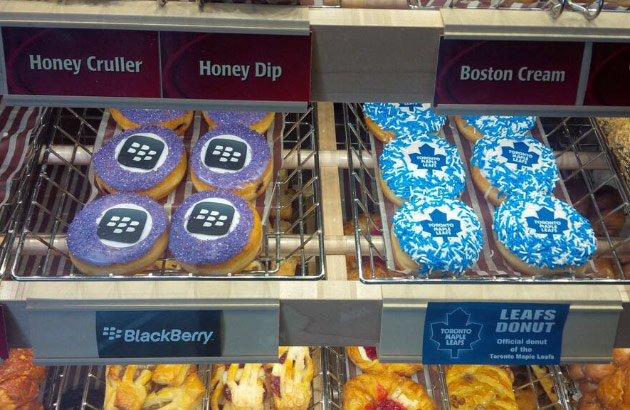
Apparently BlackBerrys are in season in Canada. Meanwhile, another fruit is dominating the US market.

0 Comments Share

Huawei's new high-resolution tablet may give the Nexus 7 a run for its money

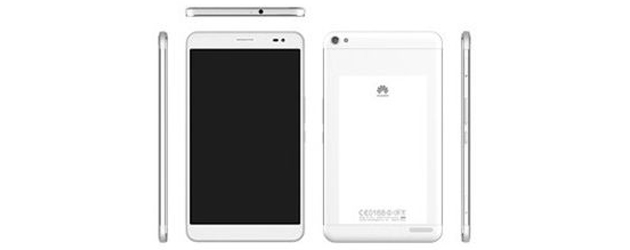
Huawei MediaPad X1 tablet gets TENAA certification

There isn't much choice among 7-inch Android tablets with high-resolution screens -- the Nexus 7 is frequently the only practical option. However, it's about to get a proper challenger. China's TENAA has certified the Huawei MediaPad X1 7.0, a small slate with a 1,920 x 1,200 display. It's not clear that the X1's 1.6GHz quad-core Hisilicon processor will outperform the Snapdragon S4 Pro inside the Nexus, but the device will be a featherweight at just 8.4 ounces and 0.3 inch thick. There's also 3G inside. About the only clear setback is the use of Android 4.2 -- where's KitKat, Huawei? The company hasn't said when it might reveal the new MediaPad, but certification raises the possibility of an announcement in the near future.

0 Comments Share

This kit lets you build a musical instrument from just about anything

Dentaku's Ototo music kit

Wish you could easily craft a musical instrument out of whatever you have lying around the house? You'll get that opportunity if Yuri Suzuki's team at Dentaku brings its crowdfunded Ototo kit to market. The synthesizer turns any conductive material into an instrument, changing its sound based on the nature of the object. An eggplant will carry a different tune than tinfoil, for instance. You can take greater control of your performance through optional light-, touch- and even breath-sensitive sensors; the gadget also connects to computers through USB if you'd like to use it as a MIDI controller. It will take a minimum £45 pledge ($74 plus $8 in shipping) to reserve Ototo ahead of its planned launch in June, but it may be worth the expense if you're tired of conventional music-making.

0 Comments Share

Canada's Wind Mobile offers unlimited US roaming for $15 extra per month

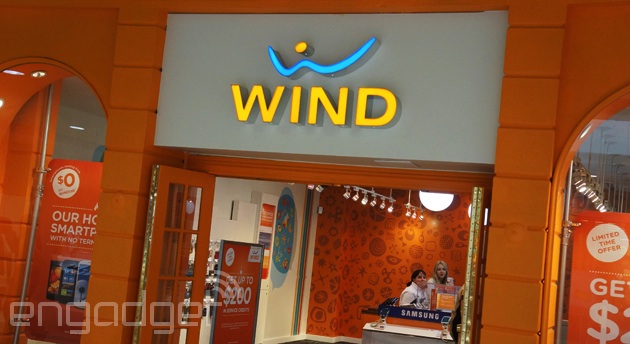
Wind Mobile store

Canadians frequently have to pay through the nose to use their phones in the US; at best, they'll get a paltry 50MB of data per day. They won't have that problem for long, though, since Wind Mobile is launching an unlimited US roaming plan on February 3rd. For $15 extra per month, subscribers will get to use as much data, text messaging and voice as they like while visiting their American neighbors. This isn't as sweet a deal as T-Mobile USA's free basic data, but it's still a huge bargain for traveling Canucks who'd rather not deal with an outrageous phone bill when they get home.

0 Comments Share

Should Brits buy the new, slimmer and pricier PlayStation Vita?

Decisions, decisions, decisions. Saying it three times won't make things any easier, but that's where we come in. Sony's latest iteration of the PlayStation Vita handheld, which we're going to call the Vita Slim from now on (as seems to be the fashion), is coming to the UK, having previously only been available in Asia. It's up for pre-order right now and will launch a week from today -- so, do you want one? The choice is ultimately yours, of course, and it's a delicate one, but if the pressure is too much to bear then head past the break where we explore how the Slim stacks up against the Vita of old, and whether it's really worth the extra £50 for a console that delivers essentially the same experience.

Hardware

Now, we're not here to tell you that the PS Vita is an essential purchase -- whichever version you're looking at. If you're unfamiliar with the handheld, or perhaps the PlayStation brand as a whole, then it's really a matter of how you like to game on the go. Are you more Killzone than Brain Training, more Need for Speed than Mario Kart, or maybe you're happy killing commute time with a bit of Angry Birds and don't need another device at all? If you're going in blind, then it's probably best to start with a quick browse of the Vita's game catalog, and check out our full reviews of the original and Slim models to get acquainted.

The Vita, in general, is serious and well-built hardware. Dual thumbsticks, a 5-inch touchscreen display, another touch panel on the rear, stereo speakers and two cameras facing forward and back. Most importantly, it delivers the best graphics of any handheld, verging on last-gen console territory.

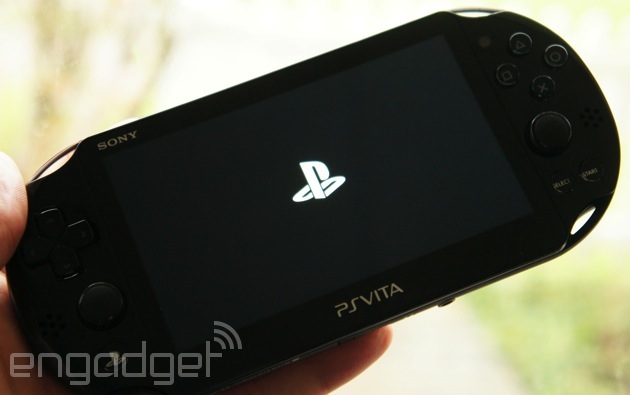
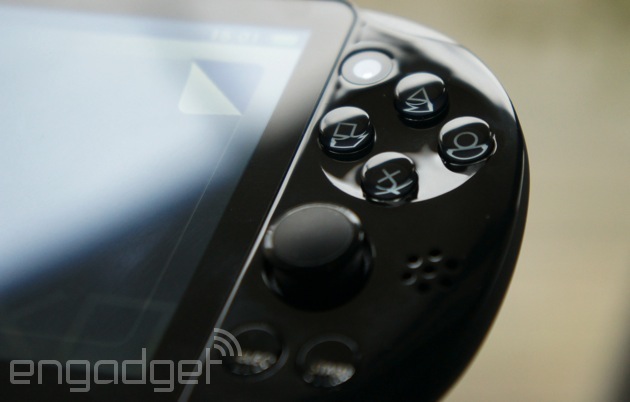
As the Vita Slim isn't a sequel, you'll find everything mentioned across both iterations, so what's the hook? As you've probably guessed, the Vita Slim is everything the Vita is, but in a smaller package: 20 percent thinner and 15 percent lighter, to be exact. At 15mm thick and weighing 219g, it's still not pocket-sized by any means, but the nip and tuck's welcome nonetheless, alongside a few other minor revisions that make it more comfortable to hold.
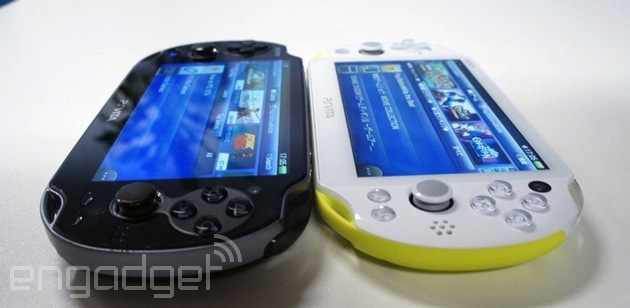
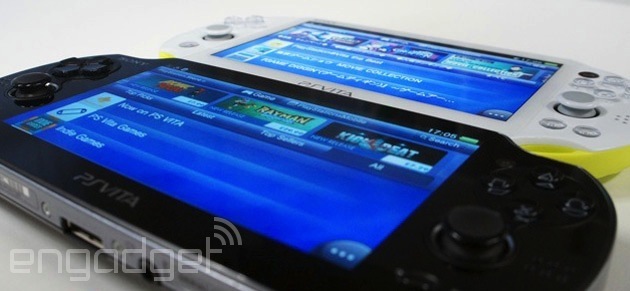
(Note: The white model in the comparison shot above is available in Japan only. The UK Slim model is black.)

This is one of the main draws of the Vita Slim -- it's just that bit more portable. Beyond aesthetic changes, there's a far more important improvement to battery life. Instead of 3-5 hours game time on the original Vita, you're looking at around 8 hours with the Slim. Forgetting price difference, it's hard to recommend the old Vita on that stat alone. If a portable console can't manage a decent-length plane ride without needing a recharge, then we should revisit the definition of portable.

How did Sony achieve this with less space to work with? Well, that's the one drawback of the Vita Slim. It's dropped the OLED display of the OG Vita for an LCD panel, which is where much of the power savings come from. There's no getting around it: the OLED panel is better. Color representation and viewing angles trump those of the LCD screen, but unless you're a huge videophile, you'll likely appreciate the extra battery life way more. The screen may've been downgraded, but that's not to say it's of poor quality.
SONY DSC

The Vita Slim is different in two other respects: it's equipped with WiFi only, whereas the older model has a 3G option, and it has 1GB of internal storage where the other has none. We can't imagine the lack of 3G is a deal-breaker for anyone, which is probably why Sony couldn't be bothered with a cellular variant. A gig of storage might not sound like much, it won't go a long way, and you can pick up a 4GB Vita-specific memory card (thanks, Sony) for under a tenner. Getting 1GB free, though, is just one less thing to think about when you tear it from the box and wanna dive right in. In a pure hardware match-up, we'd have to put our money on the Vita Slim, but how much money are we talking about exactly?

Price

A number of sites have now opened up pre-orders for the Vita Slim, and although it's more expensive than the older model, it's still a significant saving over the WiFi-only OG model that launched in 2012 for £230. Yes, it's still way more expensive in the UK than in its home country of Japan, but you're British and should be used to paying more for everything, so suck it up. A couple of retailers -- Amazon, Game, Simply Games and ShopTo, for example -- have stuck to Sony's RRP of £180 for the console alone. (There are other sites asking as much as £200, but let's ignore those.) The latter two retailers are also plugging bundles that add just a fiver to the price of the handheld alone. ShopTo has the greatest selection, bundling the Vita Slim with a number of single, high-profile titles, or download vouchers and memory cards. The best deal seems to be the Slim with ten-game download voucher plus a 16GB memory card, which you'll need to store those voucher titles on anyway. Sure, most are old, but there are a few gems such as WipeOut, and that 16GB card is worth around the price of Vita game itself.

Currently, ShopTo also appears to have the best deal on the original Vita, with the WiFi and 3G model priced at only £130. This appears to be a transient deal, however, and most other retailers have the same model on offer for £140 to £150. At this point, we wouldn't entertain the thought of getting an OG Vita bundle as their prices haven't reacted to the Slim's impending arrival. Game is selling the same £185 Slim bundle we listed above with the old Vita for £155, but even this deal should see a reduction when the Slim's launch has had a chance to impact retailer pricing.
SONY DSC

Wrap-Up

We're sure OG Vita bundles will be revised in due course, but for early Slim adopters, those with a refreshed interest in the Vita, or those thinking about upgrading, this is how things stand at the moment. Some PS fans will no doubt jump at the Slim due to the "shiny factor" (it's new, gotta have it), but unless you can trade in or sell your current Vita for a fair price, we wouldn't bother upgrading. Definitely not before the price of the Slim comes down, anyway. If you're sure now is the time to get Vita'd up, then ShopTo's £130 offer for the original model is certainly tempting. If you can stretch to £185 though, go for one of the Slim bundles with a 16GB memory card thrown in. Any console is an investment, however late you are to the party, and due solely to the portability improvements the Slim boasts, we'd call it the smarter one.

0 Comments Share
Apple bombarded with candy-themed games in protest at the word 'candy' being trademarked

Candy Crush Saga

Such sweet, sweet revenge. After the maker of the hugely popular Candy Crush series of games on the App Store somehow managed to trademark the word "candy" in Europe, other developers have started to fight back by blitzing Apple with an insulin-inducing array of Candy-themed game submissions. Over 100 hastily prepared titles have already been put forward as part of an organized "Candy Jam" protest against the trademarking of common words, including such gobstoppers such as CAN D, ThisGameIsNotAboutCandy, CanDieCanDieCanDie and the inimitable Candy_Game ("Press to hear Candy.")
In the meantime, the developer at the center of the controversy, King.com, continues to pursue legal action against those who use any of words in its arsenal of trademarks, even those that have nothing to do with sugar. This apparently includes one poor dev who had the cheek to use the word "saga" in a Norse mythology-themed game called The Banner Saga -- a title that treads too closely to Candy Crush Saga, according to legal documents filed by King. What's more, now that King has also filed for new trademarks in the US, this whole saga (eek) could be about to get even more sickly.

0 Comments Share

Sony upgrades smartphone-pairing QX10 and QX100 lens cameras with higher ISO and 1080p video capture

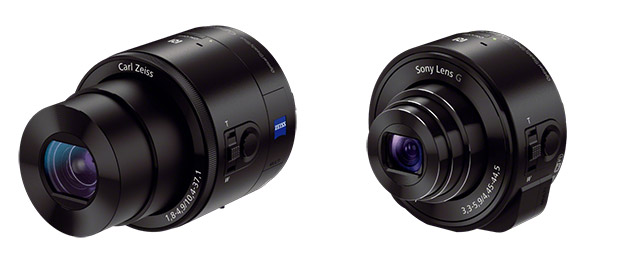
Shutterbugs who shunned traditional point-and-shoots in favor of Sony's QX10 and QX100 lens cameras can now take even better images and videos. Thanks to a firmware upgrade, both smartphone lens attachments are now capable of recording clips with a higher resolution (1,920 x 1,080) than before (1,440 x 1,080). It also cranks up the clip-ons' max ISO settings from 1,600 to 3,200 on the QX10 and from 3,200 to 12,800 on the QX100, which is bound to please those especially fond of nighttime photography. Other than these two feature boosts, folks with the more expensive QX100 get an extra shutter speed mode for their devices. Unfortunately, users can't upgrade over their phones and will have to download the firmware on a Windows (XP/Vista/7/8) or a Mac computer.

0 Comments Share

US phone companies to explore replacing all phone numbers with IP addresses

A cell tower stands alone in the desert

Voice-over-IP (VoIP) is nothing new as a technology, of course, but so far it's been regarded merely as an add-on to America's regular, analog-based copper and cellular voice networks -- networks that are currently maintained as a matter of legal requirement. The FCC isn't necessarily such a stickler for tradition, however, as it is now encouraging phone networks to explore what would happen if VoIP replaced everything else. In other words, how would the system cope if the only phone numbers were Internet Protocol addresses; if even emergency calls were transmitted over the web; and if remote rural communities became dependent on VoIP, with no other type of network as a backup? Companies that want to participate in the experiment have until late February to submit their ideas, with approvals expected to be granted as early as March -- but don't fear, the tests will only be permitted in "discrete geographic areas or situations," which is the FCC's way of politely reminding telecom providers not to get ahead of themselves.

0 Comments Share

PlayStation 4 companion app update highlights live game broadcasts

The latest update for Sony's PlayStation mobile app is out for Android and iOS, and it's surprisingly video-focused. Thanks to the new Live from PlayStation section, available game streams can be browsed directly from your device -- although they won't open in the app itself. Ustream feeds open in the service's own application (at least on Android), while Twitch.tv streams are relegated to your mobile device's browser. The change log also notes that video notifications from the PS Store are supported, and you'll find them under the What's New section on the home screen. Additionally, the update promises to not pull your PS4 out of sleep mode when you open the app to, say, accept a friend request or queue a game download -- perfect if you're looking to conserve a little electricity.

0 Comments Share

Thursday, January 30, 2014

Daily Roundup: Xperia Z1 Compact review, Facebook Paper and more!

You might say the day is never really done in consumer technology news. Your workday, however, hopefully draws to a close at some point. This is the Daily Roundup on Engadget, a quick peek back at the top headlines for the past 24 hours -- all handpicked by the editors here at the site. Click on through the break, and enjoy.

Facebook unveils Paper for iPhone

Earlier today Facebook introduced yet another news aggregator into the world. Dubbed Paper, this (as of now) iPhone-only app promises a distraction-free layout with curated news from well-known sites and "emerging voices." Follow the link for more information.

Sony Xperia Z1 Compact review

Sony's new Xperia Z1 Compact smartphone might be smaller than the original Z1, but its internals are nearly identical. Starting at £440 in the UK, this handset brings the same waterproof housing, 20.7-megapixel camera and quad-core 2.2GHz Snapdragon 800 chipset as its older sibling. Click through for our review.

Lenovo's Motorola deal and American manufacturing

Lenovo's swift purchase of Motorola raises many questions about its footprint in the smartphone marketplace. But what about Moto's employees? Click on through as Engadget's Terrence O'Brien breaks down how the deal could affect Moto's US manufacturing.

Satya Nadella, senior vice president of research and development for the online services division for Microsoft Corp., speaks during a Microsoft Search Summit event in San Francisco, California, U.S., on Wednesday, Dec. 15, 2010. Microsoft Corp. updated its Bing search engine today, aiming to build on U.S. market-share gains last month as it chases Google Inc. Photographer: David Paul Morris/Bloomberg via Getty Images

Satya Nadella reportedly the next Microsoft CEO

Microsoft has yet to announce a successor to previous CEO Steve Ballmer, but if a report from Bloomberg is true, Microsoft Cloud VP Satya Nadella might be next in line. Follow the link for more.

You also might like: Make Evernote your own with its latest iOS update Samsung escapes penalty after its lawyers leaked secret Apple documents This smart handbag could stop you from overspending

0 Comments Share

Have a favorite music streaming service? Sound off, people of Engadget

Wrapping your head around all the various options for streaming music can be overwhelming. How do you choose between Spotify, Rdio, Beats Music, Rhapsody, Google Play Music All Access or any of the other services out there? Engadget Forums member daninbusiness is here to help, and he's done a great job breaking down the pros and cons of each music provider that he's used. But one man's opinion does not a consensus make, y'all. What's your go-to choice for music? How would you persuade your friends that the benefits of Spotify far exceed those of Rdio? Sound off in the forums, folks, your wisdom is needed.

0 Comments Share

Samsung Galaxy Note 3 Neo aims to offer S-Pen experience without flagship specs

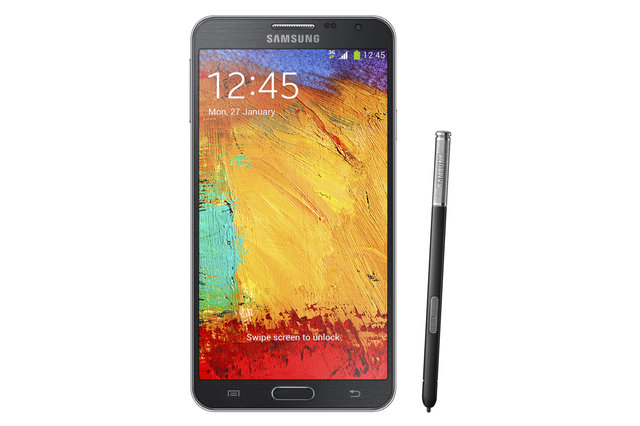
We've seen the Galaxy Note series get larger and larger as time passes, but this is the first time we've seen the Note actually get smaller. The Galaxy Note 3 Neo has now been officially unveiled by Samsung Poland and will come in two flavors -- 3G and "LTE+," and the latter offers connectivity on higher-speed Category 4 networks (up to 150Mbps down/50Mbps up). The two share a lot of similarities, but there are a couple key differences as well: as you might expect, the LTE+ model is the more specced out of the pair and offers a hexa-core processor consisting of two 1.7GHz Cortex-A15 cores and four 1.3GHz Cortex-A7 cores. The 3G (HSPA+ 21Mbps) version, on the other hand, will enjoy a quad-core 1.6GHz processor of unknown make.

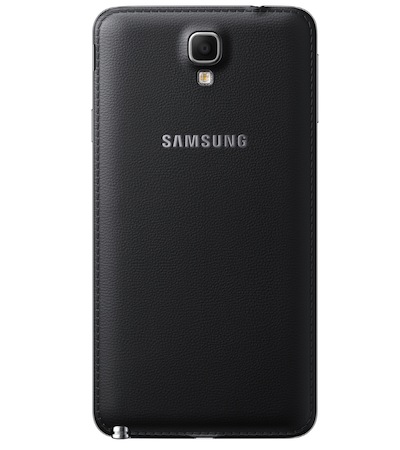
So what's important about the new Neos? Both versions of the Android 4.3 Jelly Bean device feature a 5.5-inch 720p Super AMOLED panel with full S-Pen capability, which means you'll be able to take advantage of Air Command, S Note, Multi-Window and other pen-related functions; in other words, it'll be a less expensive version of the Note 3 for those who want the functionality without the absolute top-of-the-line features. It even comes with the same leatherlike back cover as its flagship counterpart (shown below).

The 162.5g Neo is 8.6mm thick, is compatible with Samsung's Galaxy Gear smartwatch and comes with a pretty decent array of specs: you're looking at a 3,100mAh battery, 8MP rear camera/2MP front-facing camera, 2GB of RAM, IR, NFC, WiFi 802.11 a/b/g/n/ac, 16GB internal storage and microSDXC capacity up to 64GB. Not too shabby for a "Note 3 mini" of sorts, although we're not sure what the price is at present time. Samsung says we should expect a global rollout next month (except the US and the UK, if the company hasn't changed its mind) in our choice of black, white or green.

0 Comments Share

Engadget HD Podcast 383 - 1.30.14

Engadget HD Podcast 378 - 12.11.13

The rumor mill has been grinding away this week, providing juicy bits of Apple and Amazon news for Ben and Richard to chew on. Netflix also announces its new 'post-play' feature, which prompts the crew to request a sleep detection feature. While a Kinect-type solution may seem invasive, it would be great for knowing when you konk out so it could stop episode playback. You won't be catching any Zs during this show, however, with Q4 updates on major manufacturers, discussion about the upcoming Super Bowl and the Fantasy Football league results. So hop on down to the streaming links below to catch the latest episode of the Engadget HD Podcast.

Hosts: Richard Lawler, Ben Drawbaugh

Producer: Jon Turi

Hear the podcast:

10:27 - TiVo reportedly lays off industrial design team, sees its future in DVR software
16:31 - New Apple TV may include a revamped interface, more kinds of content
22:43 - Rumors suggest Amazon's game console project is still alive
29:35 - Netflix ends 2013 with 44 million subscribers, will keep experimenting with pricing
36:07 - Netflix 'post-play' feature that automatically jumps to the next episode is now optional
47:28 - Time Warner Cable customers can now stream on-demand shows from A&E Networks
49:40 - Google offers Fiber to more Provo residents, to expand coverage area throughout 2014
50:15 - Samsung profits drop slightly, but it's still seeing increased demand for phones, tablets
52:46 - LG shrinks losses thanks to strong TV sales, promises new flagship phone next month
55:37 - Blu-ray discs may soon get billions of colors with new encoding tech
58:36 - Must See HDTV for the week of January 27th: Super Bowl XLVIII, State of the Union Address

Get the podcast:

[iTunes] Subscribe to the Podcast directly in iTunes (MP3).
[RSS - AAC] Enhanced feed, subscribe to this with iTunes.
[RSS - MP3] Add the Engadget HD Podcast feed to your RSS aggregator.

LISTEN (MP3)
LISTEN (AAC)

Contact the podcast:

Connect with the hosts on Twitter: @Rjcc, @bjdraw

0 Comments Share

Nokia's long-awaited Lumia Black update rolls out to the Lumia 820 and 920 on AT&T

Nokia's long-awaited Lumia Black update rolls out to the Lumia 820 and 920 on AT&T

It was just three weeks ago that Nokia pushed out its Lumia Black software update to the Lumia 925 and 1020, with the promise that other Lumia phones would get updated asap. Well, sure enough, the Lumia 820 and 920 on AT&T have received the software patch, according to WPCentral. As on other Lumia devices, the update brings app folders, Bluetooth 4.0 LE support, an updated Glance screen and the unified Nokia Camera app. No RAW shooting, unfortunately -- that's a luxury reserved for 1020 and 1520 owners -- but you'll otherwise enjoy the same updates as anyone else with a newish Windows Phone 8 device. At any rate, feel free to get your download on, and do let us know in the comments how it all goes.

0 Comments Share

New Microsoft app brings recipes and grocery lists to your Windows Phone

Bing Food and Drink for Windows Phone

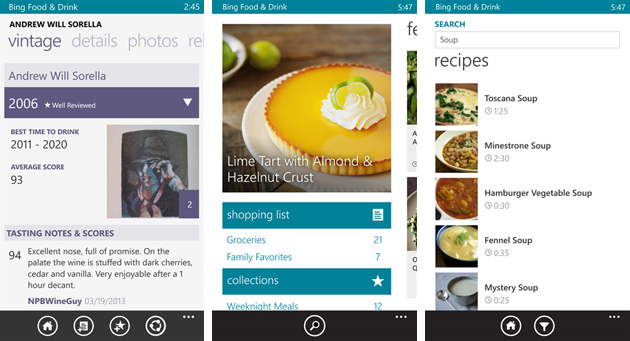
The Bing Food & Drink app for Windows 8.1 is handy if you need to look up a recipe on your PC, but what if you're searching for ingredients at the store? Never fear, as Microsoft has quietly released a beta Windows Phone version of its culinary software. Much like its desktop counterpart, the mobile port will let you both search for great meals and create grocery lists. Microsoft makes full use of its own platform by syncing selections with the desktop app, putting a Live Tile on the home screen and making it easy to share favorites. Lumia-toting amateur chefs will want to grab the app today from the Windows Store.

0 Comments Share

Time Warner Cable to improve network in NYC and LA, promises faster internet, more reliability, better service

TWC Maxx: the extra 'x' means it's better. At least, that's what Time Warner Cable would have us believe about its thusly named new initiative to improve the quality of its pay TV and internet offerings in Los Angeles and New York. The plan is to deliver at least 3X internet speeds for every customer except for those one the Everyday Low Price tier (which still should see a more modest speed boost).

How so? Well, TWC's going to upgrade its network hubs in those cities. and it's going to retire its analog channels in LA in favor of digital offerings (as it did last year in NYC) in order to free up more bandwidth for SoCal customers. The telco will also continue expansion of its free, public WiFi networks (for business customers and folks on the Standard or better plans). Folks will also have the option to schedule same-day appointments when they're having problems. Last, but not least, TWC announced plans to continue its drive to deliver more On Demand content and to debut an improved set-top box with six tuners and increased storage capacity later in the year.

0 Comments Share

Google Wallet will make collecting loyalty points easier and noisier

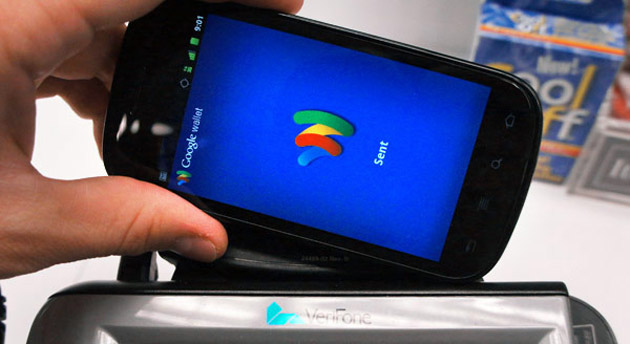
Early adopters of mobile wallet services are brave enough to hand over the keys to their finances in the name of convenience. When you're signed up to a plethora of loyalty schemes, though, inputting all these details before ditching the plastic could be quite the opposite. Google doesn't want you burdened with such tasks, and in an impending update to its Wallet app for Android, has said it'll introduce a new feature that adds loyalty cards with one click of your smartphone's camera shutter. A natural progression from the recent recognition feature that adds debit and credit card details in the same way, snap a picture of your loyalty card and Wallet will do the rest. Furthermore, when you're near a store with which you have a card, you'll get a notification to remind you (that Google knows all). While the Android app was updated yesterday, there's no mention of these additions, so we'll take Big G's word that it's "rolling out this week." No news on when an update could hit the iOS version of the app, but as Wallet only launched on the platform a few months ago, we're not going to hold our breath.

0 Comments Share

Under Lenovo, will Motorola have better luck with Chinese smartphone buyers?

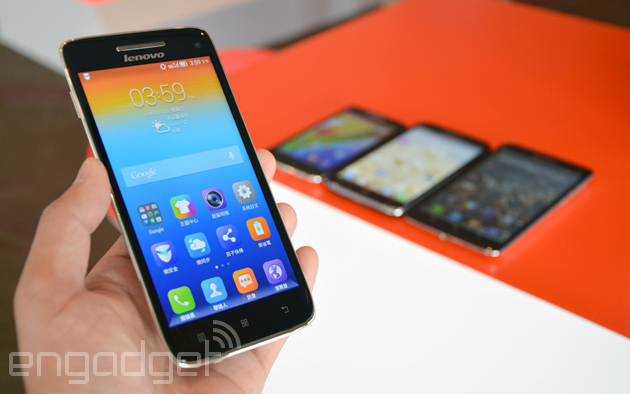
You may struggle to take Lenovo seriously after Ashton Kutcher, its new "product engineer," knelt before CEO Yang Yuanqing at the Yoga Tablet launch in Beijing. But this is the same Chinese company who's making a second-round purchase from IBM -- previously for its PC division with $1.75 billion, and this time for its x86 server business with $2.3 billion. Merely a week later (and just in time for Chinese New Year), Lenovo announced that it's also snapping up Motorola's smartphone business from Google for $2.9 billion, with the intention to crack the North American, Latin American and Western European mobile markets.

When combined, Lenovo and Motorola ("LenoMo?" "Lenola?") will leap from fifth place to third in terms of worldwide smartphone shipments between Q4 2012 and Q3 2013, placing them ahead of LG, Sony and Nokia, but they still trail far behind Samsung and Apple. Looking at its home turf, though, will the deal do much to help Lenovo maintain its number two position in the increasingly competitive market in China? Or perhaps even knock Samsung off the top of the chart? Not directly, no.

The last time Motorola launched a phone in China was in November 2012.

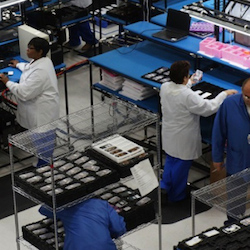
You see, what Lenovo is gaining from this deal are the "legendary" Motorola brand and its product roadmap, but while Moto had a strong presence in China back in the day, it's quite the opposite ever since Google took over. Leaving behind a tiny team in Beijing, any R&D talent it had at that point soon moved on to other local establishments like Xiaomi, Smartisan and, ironically, Lenovo. The last time Motorola launched a phone in China was in November 2012 for its RAZR i MT788; and about a month later, it sold its Tianjin factory to Flextronics. Nowadays, it's as if this American company is merely maintaining its customer service and social media presence in China -- including the occasional promotion of the Moto X, a phone that isn't even available there.

From that perspective, Lenovo's China division won't benefit directly from Motorola's assets. If anything, it'd be the Motorola team taking advantage of Lenovo to make a comeback there, assuming there's still such a plan after yesterday's announcement. At the moment, the Chinese market is torn between big high-end phones and very affordable devices. It could be interesting to see how consumers react to the relatively mid-range -- albeit well-designed -- Moto X, along with some of its software features that put many Chinese manufacturers to shame. The cheaper dual-SIM Moto G and the more powerful Droid Ultra series may stand a better chance, unless Lenovo's own vast range of phones get in the way, depending on the retail channel.

Lenovo should have the manufacturing and marketing prowess to localize Motorola's custom phone service.

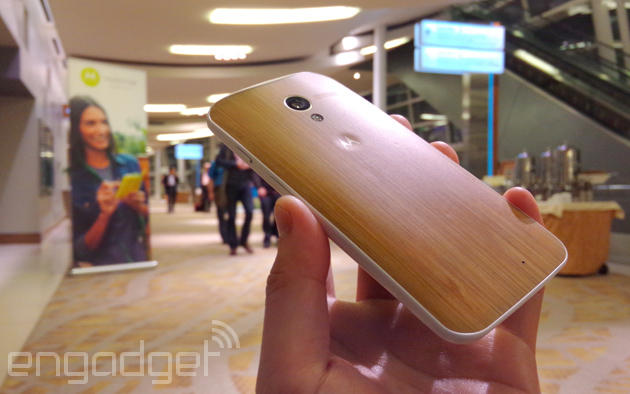
Either way, Yang already promised that he plans to "protect the Motorola brand and make it even stronger," so it's likely that Motorola will return to the Chinese market, rather than skip the country completely. A bit like how Lenovo's IdeaPads have been co-existing with the ThinkPads in the same regions. What it'll need is some sort of special niche, and in a market where Nike's been offering its NIKEiD shoe customization service since 2008, surely there's space for Motorola's Moto Maker as well? With the ever-increasing appetite amongst Chinese consumers, Lenovo should have the manufacturing and marketing prowess to localize Motorola's custom phone service, in order to lure those who want to take uniqueness to the next level -- be it a phone with various fluorescent colors, or simply just one with a wooden patterned back.

That'd be bad news for the other local manufacturers: only Taiwan's HTC has made a similar attempt with the E1 back in April, but the response to the poor execution was, unsurprisingly, weak. The closest you can get right now is choosing a different back cover, case or stickers while ordering from Xiaomi (provided that you can even snag one before they sell out in a matter of seconds) or other Chinese e-tailers. That's hardly an authentic customization experience when compared to Motorola's service, and Chinese mobile consumers are ready for something classier.

This Lenovo-Google deal isn't just about products. While Google is keeping the majority of Motorola Mobility's patents (about 8,000 registered in the US and about 15,000 overseas), Lenovo will take ownership of over 2,000 of those assets, as well as a license that grants access to the remainder. To put that into perspective, Lenovo already owned "more than 6,500 globally recognized patents" prior to today's announcement; whereas Coolpad of Yulong, the number three phone vendor in China, has only obtained over 4,000 patents so far. While ZTE and Huawei have sold fewer smartphones in China, they have been granted a lot more patents -- over 13,000 and 30,240, respectively -- due to their broader range of products and services.

On top of that, there's also Motorola's engineers, with Lenovo claiming that it'll be taking in all 2,800 of them as a result of this deal. The only notable part that Lenovo's missing out on is the funky Advanced Technology and Projects division (the folks behind the modular smartphone project); but hey, you get what you pay for -- there's a reason why Google's selling Motorola for a fraction of the $12.5 billion it paid back in May 2012 (though let's not forget the $2.2 billion it also got back from selling Motorola Home last year).

It's hard to imagine what these future phones and their business model will look like, but we're already interested in the results. And with Lenovo's strong foundation in China, it'd know how to give Motorola its glorious return to the country, without cannibalizing its own product line. The faster that these two companies are able to put the pieces all together, the harder they will make it for the rest of the Chinese competition to catch up.

Mat Smith contributed to this report.

0 Comments Share

Lenovo doesn't need Motorola in China, but it may revitalize the local mobile market

You may struggle to take Lenovo seriously after Ashton Kutcher, its new "product engineer," knelt before CEO Yang Yuanqing at the Yoga Tablet launch in Beijing. But this is the same Chinese company who's making a second-round purchase from IBM -- previously for its PC division with $1.75 billion, and this time for its x86 server business with $2.3 billion. Merely a week later (and just in time for Chinese New Year), Lenovo announced that it's also snapping up Motorola's smartphone business from Google for $2.9 billion, with the intention to crack the North American, Latin American and Western European mobile markets.

When combined, Lenovo and Motorola leap from fifth place to third in terms of worldwide smartphone shipments between Q4 2012 and Q3 2013, placing them before LG, Sony and Nokia, but they still trail far behind Samsung and Apple. Looking at its home turf, though, will the deal do much to help Lenovo maintain its number two position in the increasingly competitive market in China? Or perhaps even knock Samsung off the top of the chart? Not directly, no.

The last time Motorola launched a phone in China was in November 2012.

You see, what Lenovo is gaining from this deal is the "legendary" Motorola brand and its product roadmap, but while Moto had a strong presence in China back in the day, it's quite the opposite ever since Google took over. Leaving behind a tiny team in Beijing, any R&D talent it had at that point soon moved on to other local establishments like Xiaomi, Smartisan and, ironically, Lenovo. The last time Motorola launched a phone in China was in November 2012 for its RAZR i MT788; and about a month later, it sold its Tianjin factory to Flextronics. Nowadays, it's as if this American company is merely maintaining its customer service and social media presence in China -- including the occasional promotion of the Moto X, a phone that isn't even available there.

From that perspective, Lenovo's China division won't benefit directly from Motorola's assets. If anything, it'd be the Motorola team taking advantage of Lenovo to make a comeback there, assuming there's still such a plan after yesterday's announcement. At the moment, the Chinese market is torn between big high-end phones and very affordable devices. It could be interesting to see how consumers react to the relatively mid-range -- albeit well-designed -- Moto X, along with some of its software features that put many Chinese manufacturers to shame. The cheaper dual-SIM Moto G and the more powerful Droid Ultra series may stand a better chance, unless Lenovo's own vast range of phones get in the way, of course.

Either way, Yang already promised that he plans to "protect the Motorola brand and make it even stronger," so it's likely that Motorola will return to the Chinese market, rather than skip the country completely. A bit like how Lenovo's IdeaPads have been co-existing with the ThinkPads in the same regions. What it'll need is some sort of special niche, and in a market where Nike's been offering its NIKEiD shoe customization service since 2008, surely there's space for Motorola's Moto Maker as well? With the ever-increasing appetite amongst Chinese consumers, Lenovo should have the manufacturing and marketing prowess to adapt Motorola's custom phone service, in order to lure those who want to take uniqueness to the next level -- be it a phone with various fluorescent colors, or simply just one with a wooden patterned back.

That'd be bad news for the other local manufacturers: only Taiwan's HTC has made a similar attempt with the E1 back in April, but the response to the poor execution was, unsurprisingly, weak. The closest you can get right now is choosing a different back cover, case or stickers while ordering from Xiaomi (provided that you can even snag one before they sell out in a matter of seconds) or other Chinese e-tailers. That's hardly an authentic customization experience when compared to Motorola's service.

This Lenovo-Google deal isn't just about products. While Google is keeping the majority of Motorola Mobility's patents (about 8,000 registered in the US and about 15,000 overseas), Lenovo will take ownership of over 2,000 of those assets, as well as a license that grants access to the remainder. To put that into perspective, Lenovo already owned "more than 6,500 globally recognized patents" prior to today's announcement; whereas Coolpad of Yulong, the number three phone vendor in China, has only obtained over 4,000 patents so far. While ZTE and Huawei have sold fewer smartphones in China, they have been granted a lot more patents -- over 13,000 and 30,240, respectively -- due to their broader range of products and services.

On top of that, there's also Motorola's engineers, with 2,800 of them joining the Chinese company, assuming the buyer sticks to its promise of keeping all employees. The only notable part that Lenovo's missing out on is the funky Advanced Technology and Projects division (the folks behind the modular smartphone project); but hey, you get what you pay for -- there's a reason why Google's selling Motorola for a fraction of the $12.5 billion it paid back in May 2012 (though let's not forget the extra $2.2 billion it got back from selling Motorola Home last year).

EIther it's hard to imagine what these future phones will look like, but we're already interested in the results. The faster that Lenovo is able to put the pieces all together, the harder it will make it for the rest of the Chinese competition to catch up.

0 Comments Share

This smart handbag could stop you from overspending

Creditcardfinder.com.au iBag

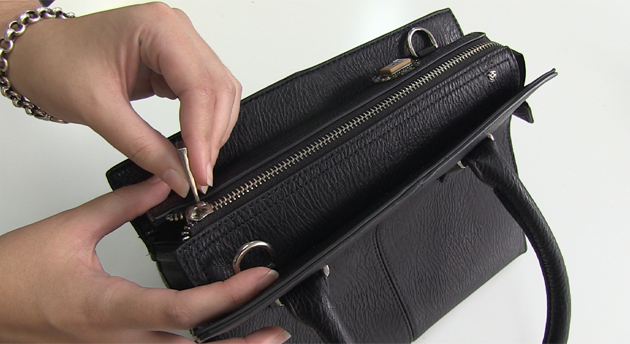
If you're the sort who overspends at the mall, you may need a firm reminder to watch your budget. How does an ever-vigilant handbag sound? Finder.com.au could soon make one: meet the iBag, a prototype carryall that locks you out if it believes you're going to splurge. The Arduino-powered bag automatically shuts tight at those times you're most likely to shop. Outside of those moments, it uses GPS to warn you when you get too close to favorite stores; ignore the alert and it will both record when you take out your wallet as well as send a text message to a trusted partner. iBag is primarily a publicity stunt meant to highlight the dangers of credit card debt, but it might become a reality. The site is asking potential customers to register their interest, and it may sell both men's and women's versions of the bag for $199 AUD ($173 US) if there's enough demand.

0 Comments Share

Bing Rewards launches on mobile, but not for everyone

Now you can earn rewards for using Bing on your mobile device, as long as it's not a Windows Phone.

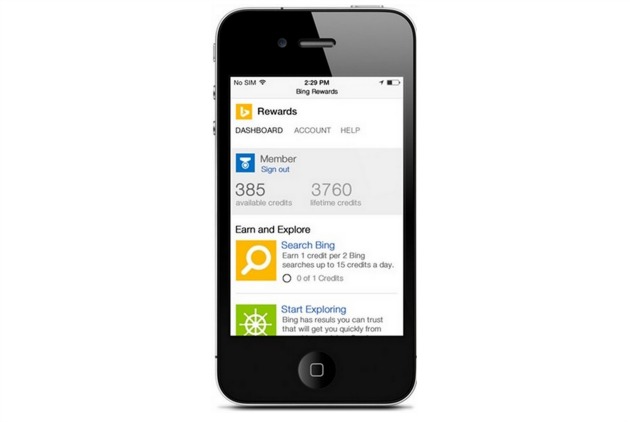
Snubbing its own mobile OS once again, Microsoft brought Bing Rewards to iOS and Android devices Wednesday. Already available for desktop, the program helps hold down Microsoft's 18.2% share of US searches by giving you credits every time you use Bing. You can then redeem credits for gift certificates to the likes of Dominos and Amazon, but not yet on mobile; that and Windows Phone support are "coming soon."

You earn 1 credit for every 2 searches you complete, up to 10 credits daily. Which means, if you start now you could Bing yourself $1 short of an Applebee's Chimicheesecake by St. Patty's Day. To take part, sign up on the mobile site using your Microsoft ID or Facebook login.

0 Comments Share

Wednesday, January 29, 2014

Amazon might launch Kindle-powered checkout system and cloud-based payment service

Amazon might still be working away on its far-out delivery drone project, but it's also reportedly cooking up something else, admittedly a little tamer, too: a Kindle checkout system and a P2P payment service. Yes, the former's exactly what it sounds like -- a Kindle tablet equipped with proprietary software and a credit card reader (like Square), at least according to the Wall Street Journal. Amazon supposedly acquired GoPago (a mobile payment platform for merchants) in 2013 to nudge this venture forward, though TechCrunch says it's not the only payment solution the firm's developing. Apparently, the company's also creating a cloud-based P2P payment system that might be accessible not just on mobile phones, but also on desktops, making it a veritable PayPal competitor. We just hope it doesn't tie up with Amazon's plans to "ship before you buy" if it does launch, because surprise credit card charges are a nightmare.

0 Comments Share

Daily Roundup: camera with gun-like sight, Nintendo execs take pay cut, and more!

You might say the day is never really done in consumer technology news. Your workday, however, hopefully draws to a close at some point. This is the Daily Roundup on Engadget, a quick peek back at the top headlines for the past 24 hours -- all handpicked by the editors here at the site. Click on through the break, and enjoy.

Nintendo execs take big pay cuts

It's no secret that Wii sales haven't exactly met expectations. To make up the difference, AFP is reporting that several Nintendo execs are taking significant pay cuts. Click the link for details.

Olympus Stylus SP-100 with unique gun sight

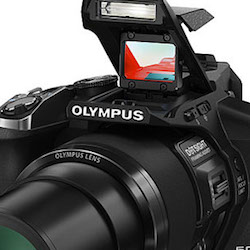
Olympus' new $400 Stylus SP-100 camera packs 50x superzoom and mid-ranged specs, but its unique "Eagle-Eye" viewfinder might make photographers feel like they're shooting more than just photos. Click the link for more information.

AT&T is leaving subsidized phones behind

AT&T matched T-Mobile's "Uncarrier" campaign with its so-called Next plan, and it seems to be working. Click through for more information as Engadget's Brad Molen breaks down the future of the US wireless industry.

Underwhelming Google Glass games

In an effort to inspire developers to populate the Glass ecosystem, Google threw together some games for the headset ... and they're nothing to write home about. Click the link for details.

You also might like: AT&T adds 1.2 million smartphones to its network, account for 93% of postpaid sales A first glimpse of the new 'multiOS' handset from Geeksphone Switched On: The next steps for digital wellness, part two

0 Comments Share

Join the Engadget HD Podcast live on Ustream at 8:45PM ET

It's not Tuesday and but it is time for the Engadget HD Podcast. We hope you'll join us live when the Engadget HD podcast starts recording at 8:45PM. Tonight we cover the recent TiVo rumors, some interesting earnings, as well as other top HD news. If you'll be joining us, take a peek at the topics after the break -- then do everything else you'll need to do in order to be ready to participate in the live chat.

TiVo reportedly lays off industrial design team, sees its future in DVR software
New Apple TV may include a revamped interface, more kinds of content
Rumors suggest Amazon's game console project is still alive
Netflix ends 2013 with 44 million subscribers, will keep experimenting with pricing
Netflix 'post-play' feature that automatically jumps to the next episode is now optional
Time Warner Cable customers can now stream on-demand shows from A&E Networks
Google offers Fiber to more Provo residents, to expand coverage area throughout 2014
Samsung profits drop slightly, but it's still seeing increased demand for phones, tablets
LG shrinks losses thanks to strong TV sales, promises new flagship phone next month
Blu-ray discs may soon get billions of colors with new encoding tech
Must See HDTV for the week of January 27th: Super Bowl XLVIII, State of the Union Address

Online video chat by Ustream


0 Comments Share

Lenovo gets Motorola, but Google gets to keep its skunkworks

Lenovo may be buying a brand to help it sell smartphones across the world, but it's not getting everything that was under Motorola's umbrella. In addition to the "vast majority" of Motorola's patents, Google will also hold onto the Advanced Technology and Projects division and fold it into its Android team.

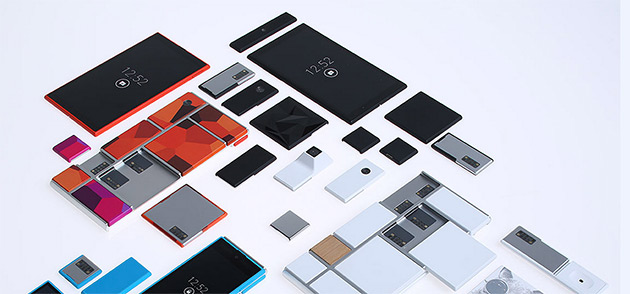
That group is responsible for some of Motorola's more wild-eyed projects, like the authentication pills and tattoos that ATAP chief Regina Dugan showed off at AllThingsD's D11 conference. The most eye-catching example of the group's work was Project Ara, the modular smartphone initiative that first started turning heads in late October. Motorola CEO Dennis Woodside said the prototype phone was nearly done just over a month later, and the company planned to get the Ara module dev kit out the door this winter. It seemed like the team was making real progress, but we'll soon see if those plans have shifted now that Motorola is leaving the building.

0 Comments Share

Facebook's mobile ads now account for over half of its revenue thanks to 945 million monthly users

As expected after the Q3 numbers, mobile advertising now accounts for 53% of Facebook's revenue, thanks in large part to News Feed ads and auto-play videos. In total, the outfit earned $2.59 billion in revenue during Q4 of 2013. The company's 556 million daily active users on mobile for the month of December (a 49 percent increase year-over-year) and 945 million mobile monthly active users (up 39 percent year-over-year) easily explains the bump from those accessing the social network on the go. Those numbers are also sure to rise as Facebook preps its targeted ad network to outfit apps other than its own, a rumored Flipboard competitor and the suite of standalone applications already tipped for 2014 release. Nearly a billion monthly mobile users should begin to ease concerns after the company faltered following its IPO, too.

[Image credit: Marco Paköeningrat/Flickr]

0 Comments Share

Apple rolls out iOS 7.0.5 to iPhone 5s and 5c in China, promises network fixes

Apple's usually pretty quick when it comes to fixing issues with its software, and today is no exception. The iPhone maker has begun delivering iOS 7.0.5 to 5s and 5c models that are available in China, an update which is expected to solve "network provisioning" for some affected handsets there. This comes shortly after Apple finally announced a deal to bring the iPhone to China Mobile, which put an end to a long, long period of negotiations and landed its shiny new devices on the carrier. As such, and even though the changelog doesn't single the network out, iOS 7.0.5 would appear to be tailored for China Mobile subscribers who recently bought an iPhone. Either way, for those of you outside of China, no need to be hunting for this particular version -- it's only for those who actually need it.

0 Comments Share